Certified Adobe Commerce/Magento, Shopify, and BigCommerce partner
What Are Website Performance Optimization Services?
Website performance optimization services improve website speed, Core Web Vitals, responsiveness, and overall user experience across eCommerce and digital platforms. Sigma’s website speed optimization services include frontend performance tuning, image optimization, caching, code refinement, server optimization, and third-party script management for Shopify, Magento, BigCommerce, and WooCommerce stores. Faster websites improve SEO rankings, reduce bounce rates, and increase eCommerce conversions and revenue.
AN OVERVIEW OF SIGMA’S WEBSITE PERFORMANCE OPTIMIZATION SERVICES
Sigma delivers end-to-end website performance optimization services designed to eliminate frontend, backend, and third-party performance bottlenecks impacting eCommerce growth, SEO rankings, and conversion performance.
Eliminate Website Speed Bottlenecks with Performance Audits, Core Web Vitals Analysis & Optimization Strategies
Comprehensive eCommerce website optimization audits focused on identifying speed bottlenecks, rendering delays, inefficient architecture, and Core Web Vitals issues impacting website performance, SEO rankings, and user experience across eCommerce stores.
Key Features
- Conducting Lighthouse, GTmetrix, and PageSpeed Insights benchmarking to identify website speed optimization opportunities across eCommerce platforms.
- Analyzing Core Web Vitals metrics including LCP, CLS, and INP to improve SEO rankings and user experience.
- Evaluating server response times and TTFB performance impacting eCommerce website speed and frontend responsiveness.
- Mapping frontend and backend performance dependencies affecting rendering efficiency, scalability, and eCommerce conversions.


Reduce Slow Page Rendering with JavaScript & CSS Performance Optimization
Optimizing JavaScript and CSS delivery to reduce render-blocking resources, improve frontend performance, eliminate unused code, and accelerate eCommerce page speed across storefronts for stronger Core Web Vitals, SEO rankings, and conversion performance.
Key Features
- Minifying and bundling JavaScript and CSS assets to reduce file sizes and improve eCommerce page load performance.
- Implementing async and deferred script loading to eliminate render-blocking resources affecting frontend responsiveness.
- Extracting critical CSS required for above-the-fold rendering to accelerate perceived page speed and user experience.
- Removing unused JavaScript and CSS dependencies impacting eCommerce storefront performance, scalability, and Core Web Vitals.
Eliminate Heavy Storefront Themes with eCommerce Theme Performance Optimization
Optimizing eCommerce theme architecture to improve frontend rendering performance, reduce unnecessary UI complexity, and accelerate website speed across leading eCommerce platform storefronts for stronger Core Web Vitals, mobile responsiveness, and conversion performance.
Key Features
- Restructuring heavyweight eCommerce themes to improve rendering efficiency and reduce frontend performance bottlenecks.
- Optimizing layout rendering processes to accelerate page responsiveness and improve user experience across storefronts.
- Removing redundant UI components affecting eCommerce page speed, usability, and frontend scalability.
- Implementing mobile-first performance optimization strategies to improve responsiveness across devices and screen sizes.


Eliminate Layout Shifts with Font Delivery & Rendering Optimization
Optimizing font delivery and rendering strategies to reduce layout instability, accelerate visual loading performance, and strengthen Core Web Vitals across eCommerce platforms without compromising branding consistency or frontend user experience.
Key Features
- Implementing font preloading strategies to accelerate text rendering and reduce delays impacting perceived page speed.
- Subsetting unused font weights and character sets to reduce asset sizes affecting frontend performance.
- Optimizing local font hosting configurations to minimize external requests and accelerate font delivery efficiency.
- Reducing FOIT (Flash of Invisible Text) and FOUT (Flash of Unstyled Text) issues impacting visual stability, frontend consistency, and eCommerce browsing experiences.
Eliminate Oversized Page Assets with eCommerce Page Size Optimization
Optimizing page structure and compressing frontend assets to reduce page weight, accelerate loading performance, and strengthen mobile responsiveness across eCommerce platforms for better SEO visibility, browsing experiences, and conversion performance.
Key Features
- Implementing GZIP and Brotli compression strategies to reduce asset transfer sizes and accelerate page delivery speeds.
- Optimizing HTML structure and frontend markup to streamline rendering efficiency and reduce unnecessary page bloat.
- Deploying lazy loading strategies for images and media assets to minimize initial page load requirements.
- Conducting asset size reduction audits to identify heavyweight resources impacting eCommerce speed and scalability.
Eliminate Third-Party Script Delays with External Script Performance Optimization
Optimizing analytics, marketing, tracking, and external script execution to reduce frontend delays, strengthen Core Web Vitals, and accelerate website responsiveness across leading eCommerce platforms for faster customer experiences and stronger conversion performance.
Key Features
- Implementing deferred loading strategies for third-party scripts to reduce render-blocking requests impacting page speed.
- Optimizing script execution priorities to streamline frontend resource loading and accelerate website responsiveness.
- Tuning tag manager configurations to reduce unnecessary script execution affecting eCommerce performance stability.
- Removing redundant tracking scripts contributing to frontend bloat, slower rendering, and Core Web Vitals degradation.
Eliminate App-Driven Slowdowns with eCommerce App Performance Optimization
Evaluating installed apps, plugins, and third-party integrations to reduce frontend overhead, eliminate unnecessary dependencies, and accelerate website performance across scalable eCommerce storefronts for faster load times, streamlined functionality, and stronger user experiences.
Key Features
- Conducting app dependency audits to identify integrations impacting eCommerce website speed and frontend stability.
- Recommending lightweight app alternatives to reduce unnecessary resource consumption affecting storefront performance.
- Optimizing API call execution to streamline data exchanges and reduce latency across eCommerce workflows.
- Implementing plugin cleanup and optimization strategies to eliminate redundant functionality impacting page responsiveness.


Eliminate Poor User Experience Signals with Core Web Vitals Optimization Services
Optimizing LCP, CLS, and INP metrics to strengthen search visibility, accelerate website responsiveness, and deliver stable browsing experiences across eCommerce platforms for stronger SEO performance, customer engagement, and conversion outcomes.
Key Features
- Implementing LCP optimization strategies to accelerate content rendering and reduce delays impacting perceived load speed.
- Reducing layout shifts affecting visual stability and frontend consistency across eCommerce customer journeys.
- Tuning interaction responsiveness to minimize input delays impacting usability and customer engagement experiences.
- Enhancing real-user monitoring capabilities to track Core Web Vitals performance across live eCommerce environments.
Eliminate Heavy Media Assets with eCommerce Image Optimization Services
Optimizing product, banner, and media assets to reduce image payload sizes, accelerate storefront loading performance, and strengthen browsing experiences across online retail ecosystems without compromising visual quality or brand presentation.
Key Features
- Implementing WebP and AVIF image formats to reduce media file sizes and accelerate page delivery performance.
- Deploying lazy loading strategies for product and banner images to minimize initial page load requirements.
- Optimizing responsive image scaling to deliver device-specific assets across mobile, tablet, and desktop storefront experiences.
- Automating image compression pipelines to streamline media optimization and reduce frontend asset overhead.

Website Performance Optimization Process: Choose the Right Approach for eCommerce Growth
Website Optimization Methodology & Selection Framework
Small to mid-scale ecommerce stores prioritize page speed optimization services, theme optimization, and app cleanup to improve website speed and Core Web Vitals performance
Growth-stage platforms require structured ecommerce website optimization workflows with Core Web Vitals optimization service and frontend performance optimization processes
Enterprise ecommerce businesses need a full website performance optimization process covering performance audits, backend optimization, and continuous monitoring for scalability
Shopify, Magento, BigCommerce, and WooCommerce stores require platform-specific website speed optimization services to ensure stable, high-performance storefronts
Sigma applies a conversion-focused web performance optimization services process to reduce load
In-House vs Tools vs Expert Website Performance Optimization Services
In-house teams identify issues but don’t fix deep frontend, backend, or Core Web Vitals performance gaps
Tools surface problems but don’t resolve rendering speed, server latency, or ecommerce scalability issues
Real performance gains require engineering-led execution, not diagnostics alone
Sigma delivers end-to-end website performance optimization services combining audits + engineering to improve page speed, Core Web Vitals, and ecommerce conversion performance across eCommerce platforms
Why Global Brands Choose Sigma for Website Optimization Services
Sigma is a strategic eCommerce technology partner delivering enterprise-grade website performance optimization services, website speed optimization services, and conversion-focused web performance optimization solutions for global online retail brands.
We optimize website performance architecture to accelerate page speed, strengthen SEO rankings, improve Core Web Vitals, and maximize eCommerce conversion performance across online retail ecosystems.
REAL-WORLD WEBSITE PERFORMANCE OPTIMIZATION SUCCESS STORIES
Delivering measurable gains in search visibility, customer engagement, storefront scalability, and digital commerce efficiency through strategic website performance optimization initiatives.
READY TO ACCELERATE WEBSITE SPEED, SEO & CONVERSIONS?
Sigma’s website performance optimization services combine deep web performance optimization engineering with platform-specific expertise to eliminate speed bottlenecks, improve Core Web Vitals optimization service, and deliver measurable gains in SEO visibility, user experience, and ecommerce website optimization outcomes across large-scale digital commerce ecosystems.
Our Clients


















Success Stories

Revamping website by upgrading WordPress and associated plugins to enhance user experience and improve overall experience for a US-based lender.
Read more
Our Client journey began with a small store in Oceania, and as their reputation for exceptional service and expertise spread, so did their customer base. They recognized the need to accommodate their growing
Read more
Hansen Wholesale, an established and esteemed online retailer, specializes in an extensive range of home decor products, ranging from exquisite lighting fixtures to elegant ceiling fans and fireplace accessories.
Read moreLatest Blogs

The competitive nature of the eCommerce industry is ever-changing, with continuous evolution, and by 2024, it is expected to be even more intense.
Read more
Key Highlights: Retailers risk costly, premature eCommerce migrations when they mistake fixable performance, checkout, or integration issues for platform limitations. Delaying a necessary switch allows structural
Read more
Key Highlights: Incomplete redirect mapping during an eCommerce migration can leave product and category URLs behind, putting established organic rankings and traffic at risk. Missing structured data, altered
Read moreFrequently Asked Questions
What is the website performance optimization process?
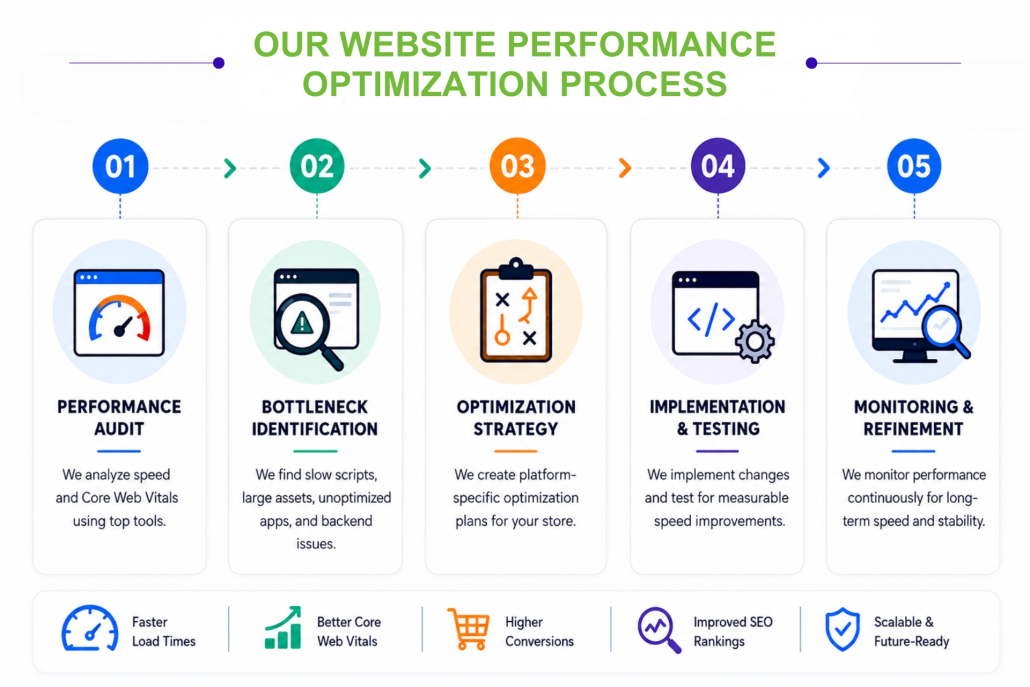
The website performance optimization process is a structured approach that includes performance audit, bottleneck identification, frontend and backend optimization, Core Web Vitals improvement, and continuous monitoring to ensure sustained speed and scalability.
How does website speed optimization improve ecommerce performance?
Website speed optimization improves load time, reduces bounce rates, enhances mobile usability, and directly increases conversions. Faster ecommerce websites deliver better shopping experiences and stronger SEO rankings.
What is included in Sigma’s web performance optimization services?
Sigma’s web performance optimization services include frontend performance engineering, image optimization, caching strategies, JavaScript/CSS optimization, server tuning, and third-party script optimization for ecommerce platforms.
Why are Core Web Vitals important for ecommerce websites?
Core Web Vitals (LCP, CLS, INP) measure real user experience. Optimizing them improves search visibility, reduces friction in browsing journeys, and increases conversion rates across ecommerce stores.
How do you improve slow Shopify or Magento store performance?
Shopify performance optimization process and Magento speed optimization services focus on theme optimization, app/plugin cleanup, script control, API efficiency, and asset compression to improve overall storefront speed.
What causes poor website performance in ecommerce stores?
Common causes include heavy themes, unoptimized images, excessive third-party scripts, poor server response time, unused code, and inefficient frontend architecture impacting rendering performance.
What is the difference between website performance optimization and conversion optimization services?
Website performance optimization focuses on speed, Core Web Vitals, and technical efficiency, while conversion optimization services focus on improving user behavior, UX flow, and revenue outcomes.
How long does a website optimization process take?
Timelines vary based on complexity, but most ecommerce website optimization workflows take from a few days for audits to several weeks for full implementation and validation.
Do you provide continuous performance monitoring?
Yes, continuous monitoring is part of the website optimization methodology, ensuring ongoing improvements in speed, scalability, and Core Web Vitals performance.
Can website speed optimization improve SEO rankings?
Yes, improved page speed and Core Web Vitals directly impact SEO rankings by enhancing user experience signals and reducing bounce rates, especially for ecommerce websites.