eCommerce Platform Selection: What Growth-Stage Brands Get Wrong and How to Avoid It

Key Highlights:
- Growth-stage brands risk costly replatforming when they choose an eCommerce platform based on popularity rather than business requirements.
- Mismatches between catalog complexity, growth plans, and internal technical capacity can limit scalability and increase long-term costs.
- Evaluate platform options against catalog needs, realistic growth projections, and team capabilities to make a sustainable selection decision.
- Sigma Infosolutions provides eCommerce platform selection consulting to help brands assess platform fit, avoid premature investment, and plan for future growth.
Why the Right eCommerce Platform Starts With Your Business, Not Rankings
Growth-stage brands evaluating eCommerce platform options are flooded with roundup articles ranking the year’s top platforms, most of which evaluate platforms in the abstract rather than against a specific business’s catalog complexity, growth trajectory, and team capacity. Choosing an eCommerce platform requires inverting this approach entirely: starting from the business’s actual situation and working out to which platform characteristics matter most, rather than starting from a generic platform ranking and hoping it happens to fit. A platform that ranks highly in a general comparison can still be the wrong choice for a specific retailer whose catalog complexity, team structure, or growth plans do not match the profile that ranking implicitly assumes about a typical buyer’s exact situation, team makeup, budget, and current business priorities. For a CTO or VP of Engineering at a growth-stage brand, this distinction matters because a mismatched platform choice typically surfaces within twelve to eighteen months, at exactly the point when a full replatforming is most disruptive to ongoing operations and growth initiatives. Getting the evaluation framework right at the outset is considerably less costly than discovering the mismatch after significant development investment has already been committed.
Starting From Catalog Complexity, Not Platform Popularity
Catalog complexity, SKU count, variant structure, pricing rules, and whether the business serves B2B alongside B2C, should be the first factor evaluated, since it most directly determines which platforms can actually support the business without requiring extensive custom development to compensate for missing native functionality. A brand with a straightforward catalog and simple pricing can succeed on a lighter, faster-to-launch platform, while a brand with complex variant structures, negotiated B2B pricing, or multi-currency requirements needs a platform built to handle that complexity natively rather than through a stack of workaround plugins and extensions.
Weighing Growth Trajectory Against Current State
The platform decision should account for where the business is realistically headed over the next two to three years, not just its current catalog and traffic level, since choosing a platform that fits today but caps growth within eighteen months trades a lower initial cost for a more expensive, disruptive migration later. This does not mean over-building for hypothetical future scale that may never materialize; it means having a genuine, evidence-based view of growth trajectory, informed by actual business plans and market position, rather than either extreme of ignoring growth entirely or over-engineering for scale the business has no concrete plan to reach.
Comparing Platform Tiers by the Factors That Actually Matter
| Factor | Lightweight Platforms | Mid-Market Platforms | Enterprise Platforms |
|---|---|---|---|
| Catalog Complexity Fit | Simple to moderate | Moderate to complex | High complexity, B2B ready |
| Initial Time to Launch | Fastest | Moderate | Longest |
| Customization Ceiling | Limited | Substantial | Highest |
| Required Technical Team | Minimal | Moderate | Dedicated, specialized |
Assessing Team Capacity Honestly Before Committing
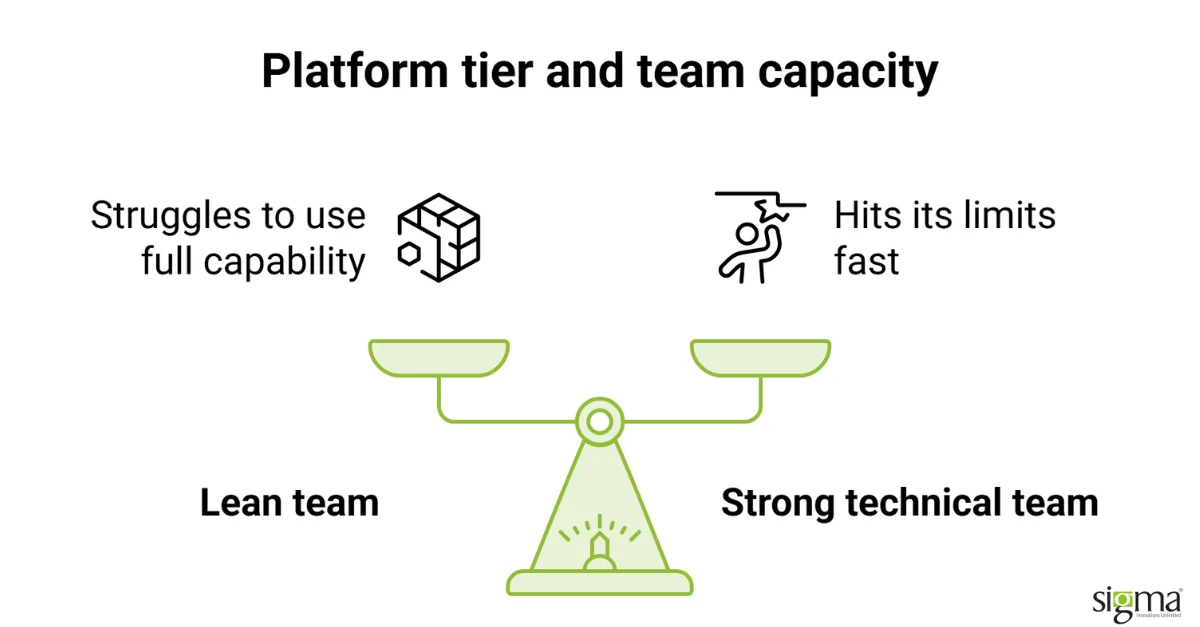
A platform’s technical capability means little if the team maintaining it does not have the capacity to use that capability effectively, which is why an honest assessment of current and near-term team capacity should factor as heavily into the decision as catalog complexity does. A lean team without dedicated development resources will struggle to maintain an enterprise-grade platform’s full capability regardless of how well-suited that platform is to the catalog on paper, while a team with strong technical resources may find a lightweight platform’s limitations more frustrating than a more capable platform’s added complexity would be.
That same capacity question, whether a team can actually sustain a platform’s technical demands over time, is central to choosing the right platform tier from the outset rather than discovering the mismatch after launch.
Building a Structured Evaluation for Choosing an eCommerce Platform Rather Than a Feature Checklist
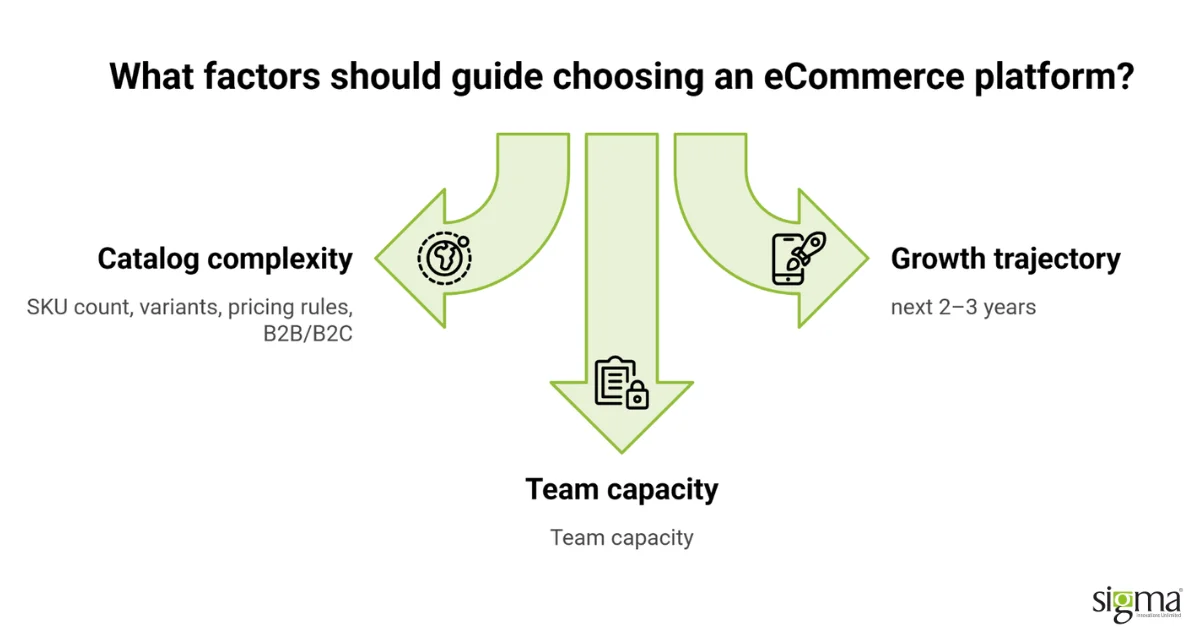
A structured evaluation weighs catalog complexity, growth trajectory, and team capacity together against each platform tier’s actual strengths, rather than comparing platforms feature by feature in isolation, since a feature checklist alone does not capture how those features interact with a specific business’s real operational constraints. Scoring each platform tier against these three factors together, rather than treating each feature as equally weighted, produces a far more actionable shortlist than a generic side-by-side comparison chart typically does. This structured approach typically narrows the realistic field to one or two platform tiers relatively quickly, at which point a deeper technical evaluation of specific platforms within that tier becomes the more productive next step rather than continuing to compare across tiers that do not fit the situation at all.
Also, read the blog: The small BIG things in Ecommerce projects
The Platform Fit Assessment Sigma Delivers Before Any Replatforming Decision
Sigma Infosolutions guides growth-stage brands through eCommerce platform selection by starting with a structured assessment of catalog complexity, growth trajectory, and team capacity, rather than defaulting to whichever platform is generating the most industry attention in a given year. That approach has included recommending both more established platforms with proven complexity handling and leaner, faster-to-launch options, since the right recommendation depends entirely on the specific business being evaluated rather than a universal answer.
Brands that go through this structured evaluation before committing consistently avoid both premature over-investment in enterprise capability they are not positioned to use and the costly re-platform that comes from choosing a lightweight platform that cannot support their genuine growth trajectory.
Revisiting the Decision as the Business Evolves
A platform decision made well for the business’s situation at one point in time is not automatically permanent, since catalog complexity, growth trajectory, and team capacity can all shift meaningfully within a few years of continued growth. Building in a periodic reassessment, checking whether the original decision still fits roughly annually for a fast-growing brand, catches the point where a platform transition would genuinely pay for itself before that transition becomes an urgent, disruptive necessity forced by a performance or functionality ceiling the current platform has already hit.
Once the structured evaluation narrows the field, the total cost of each remaining option over a realistic multi-year horizon becomes the natural next comparison, since a platform’s sticker price rarely reflects its full ownership cost once hosting, extensions, and development time are factored in.
Platform selection decisions made primarily on current requirements often create migration work within two to three years as the business scales into capabilities the chosen platform cannot support. The trade-off between selecting a platform that fits today’s needs and one that supports anticipated complexity is real, but the cost of an early migration is typically higher than the cost of the additional configuration required to set up a more capable platform from the start.
The business cost of the wrong platform selection compounds over time: a platform that cannot scale with growth forces a second migration within two to three years, and that second migration typically costs more than doing the evaluation properly the first time. Conversion, checkout reliability, and the efficiency of the internal team running the platform all degrade gradually before the mismatch becomes obvious enough to act on.
Wrapping Up:
Choosing an eCommerce platform well means starting from a business’s actual catalog complexity, growth trajectory, and team capacity, then working outward to which platform tier genuinely fits, rather than starting from a generic industry ranking and hoping it happens to apply. Catalog complexity should be the first factor evaluated, since it most directly determines which platforms can support the business without requiring extensive custom development to compensate for missing native functionality. Growth trajectory matters as much as current state, since a platform that fits today but caps growth within a short window trades a lower initial cost for a more expensive, disruptive migration later on. Team capacity deserves equal weight alongside catalog complexity, since even a technically well-matched platform underperforms when the team maintaining it lacks the capacity to use its full capability effectively. A structured evaluation weighing all three factors together, rather than a feature-by-feature checklist comparison, typically narrows the realistic field quickly to one or two platform tiers worth deeper technical evaluation. Brands that go through this structured process consistently avoid both premature over-investment in unneeded capability and the costly re-platform that follows choosing a platform that cannot support genuine growth. The right decision for a specific business is not permanent, since catalog complexity, growth trajectory, and team capacity can all shift meaningfully within a few years of continued growth and success. A periodic reassessment, checked roughly annually for a fast-growing brand, catches the point where a platform transition would genuinely pay for itself before it becomes an urgent, disruptive necessity. Getting this decision right the first time is considerably less costly than discovering the mismatch after significant investment has already gone into a platform that cannot scale with the business. The goal is not finding the platform everyone else is choosing, but finding the one that actually fits this specific business’s situation today and its realistic trajectory ahead. Once that fit is established, the next natural question becomes what each option genuinely costs to own over time, not just what it costs to license and launch initially.
Choose the Right eCommerce Platform for Long-Term Growth
Frequently Asked Questions
1. Is there a single best eCommerce platform for every growth-stage brand?
No, and this is the core misconception most roundup articles reinforce. The right platform depends entirely on a specific business’s catalog complexity, growth trajectory, and team capacity, all of which vary enough between businesses that a universal recommendation cannot genuinely apply to every situation and team.
2. How much weight should team capacity carry in the platform decision?
As much weight as catalog complexity, since even a technically ideal platform for the catalog will underperform if the team lacks the capacity to maintain and extend it effectively over time, which undermines the entire rationale for choosing it in the first place at all.
3. Should a growth-stage brand choose a platform that fits current needs or future needs?
Both, weighed together rather than treated as an either-or choice. The platform should handle current catalog complexity well while having realistic headroom for genuine, evidence-based growth plans, without over-engineering for hypothetical scale the business has no concrete near-term plan to actually reach at all in practice.
4. How often should a brand revisit its platform choice after initial selection?
Roughly annually for a fast-growing brand is a reasonable cadence, checking whether catalog complexity, growth trajectory, or team capacity have shifted enough to change the original evaluation’s outcome and warrant a closer, more deliberate look at genuine alternatives currently available on the broader market today.
5. What is the biggest mistake brands make when selecting an eCommerce platform?
Evaluating platforms in the abstract, based on general popularity or a roundup ranking, rather than against their own specific catalog complexity and team capacity, is the most common mistake, and it is what most reliably leads to a costly platform mismatch down the road within a year or two.