Fragmented Lending Systems Are Slowing Growth: How Digital Lending Solutions Connect the Loan Lifecycle

Key Highlights:
- Fragmented lending systems create costly gaps between origination, servicing, and collections, forcing teams to reconcile borrower data, loan status, and payment information across disconnected workflows.
- As loan volume grows, these gaps can compound into slower operations, limited portfolio visibility, inconsistent borrower experiences, and greater compliance and audit effort.
- Connected digital lending solutions unify critical lending data and workflows across origination, servicing, and collections, giving teams a consistent view of the loan lifecycle.
- Sigma Infosolutions engineers digital lending solutions around the lender’s full loan lifecycle, connecting workflows, integrations, borrower experiences, and operational systems to support scalable lending operations.
Introduction
Digital lending solutions are often evaluated one stage at a time: a loan origination system here, a servicing platform there, a collections tool bolted on last. That approach solves each stage in isolation and leaves the connections between them unmanaged, which is exactly where most lenders lose money, time, and borrower trust. A loan’s data should move through application, underwriting, servicing, and collections as one continuous record, not as three or four separate exports that someone has to reconcile by hand. For a Head of Digital Lending or VP of Operations evaluating a platform decision, the real question is not which point solution looks best in a demo, but whether origination, servicing, and collections can operate as a single connected system that holds up under audit, scales with loan volume, and keeps a borrower’s experience consistent from the first click to the final payment.
Why Fragmented Systems Undermine the Business Case for Digital Lending Solutions
Most mid-sized lenders did not choose fragmentation. It accumulated. A team adopts an origination system to handle intake, then a separate servicing platform to manage the loan book, then a third tool or a spreadsheet-based process for collections, each chosen for a reasonably short-term need. The result is a stack where data has to move manually between systems, and every manual handoff is a place where errors, delays, and compliance gaps can enter. When a borrower’s contact information changes in one system, it does not update automatically everywhere it needs to. When a collections agent needs a full payment history to have an informed conversation, pulling it together across three platforms takes time the agent does not have.
This fragmentation carries a real, if often underestimated, cost. Regulatory audits become harder to prepare for when the audit trail is split across systems with different logging standards. Borrower experience suffers when a change made in one channel- a phone number update, a payment plan request- takes days to reflect elsewhere. And portfolio insight lags behind reality, since collections teams often work from data that is already a week or two stale by the time it reaches them. None of this shows up as a single dramatic failure. It shows up as a steady tax on operating margin and borrower retention that compounds as loan volume grows.
Connect origination, servicing, and collections on a platform built around your lending workflow, not a vendor’s standard template.
What a Connected Digital Lending Platform Actually Needs to Unify
| Capability | Fragmented Stack | Unified Digital Lending Solution |
| Borrower Data | Re-entered or exported between systems at each stage | Captured once and shared automatically across origination, servicing, and collections |
| Underwriting Decisions | Manual review queues with inconsistent turnaround | Automated decisioning with a documented, auditable trail |
| Portfolio Visibility | Delayed, stage-specific reporting | Real-time visibility across the full loan lifecycle |
| Compliance Audit Trail | Reconstructed manually from multiple systems | Maintained continuously as part of the platform’s core design |
A genuinely connected digital lending platform treats origination, servicing, and collections as three views into one system, not three separate products that happen to pass files to each other. Origination needs to capture borrower and loan data once and make it available downstream without re-keying. Servicing needs that same data to stay current in real time, so a change made through a borrower portal is immediately visible to a support agent or a collections specialist. Collections needs enough history and behavioral signal to work proactively, flagging an account before it becomes delinquent rather than reacting after a payment is missed. When any one of these three pillars is disconnected from the others, the whole system behaves like a fragmented stack wearing a single login screen.
Governance and Compliance Requirements a Unified Platform Must Support
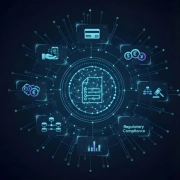
Connecting origination, servicing, and collections is not only a workflow improvement, it is a compliance requirement in most North American lending environments. Regulators expect a lender to produce a clear, documented trail for how a credit decision was made, how a loan was serviced, and how collections activity was conducted, and that trail is far easier to produce when the data lives in one governed system than when it has to be assembled from three. Role-based access controls, consistent audit logging, and a single definition of “current balance” or “days past due” across every team all become achievable once the underlying platform is unified, and difficult to guarantee when it is not.
This matters more, not less, as a lending operation grows. A lender adding new loan products, entering new states, or scaling loan volume needs its compliance framework to scale with it, and a fragmented stack makes that scaling work harder every time a new system gets added to the patchwork. Building governance into the platform itself, rather than treating it as a manual process layered on top, is what allows a lending operation to grow its loan book without growing its compliance risk at the same pace.
Collections acceptance rate climbed 32 percent after a personal lending platform replaced its fragmented servicing stack. Read our success story
Sequencing a Digital Lending Solutions Rollout Without Disrupting Active Loans
Consolidating onto a connected platform is a real migration, not a configuration change, and it has to be sequenced carefully because a lender cannot pause active loans while the work happens. The most reliable approach starts with origination and a defined set of high-volume loan products, proving the connected model on new business before touching the existing portfolio. Servicing migration follows, typically running the new and legacy systems in parallel for a defined cutover window so no loan record is ever missing from either system during the transition. Collections integration comes last, once servicing data is reliably flowing in real time, since collections is the stage most dependent on having accurate, current data from everything upstream of it.
AI-powered automation can further streamline underwriting, servicing, and collections as you modernize.
Lenders that skip this sequencing, attempting a single full cutover across origination, servicing, and collections at once, take on unnecessary operational risk for very little schedule benefit. A phased rollout costs a few additional weeks of dual-running systems and buys a materially lower risk of a borrower-facing disruption during migration, which is a trade most operations leaders are glad to make once the alternative is spelled out.
Sigma Infosolutions Builds Digital Lending Solutions as a Connected Lifecycle, Not a Point Tool
Build Digital Lending as a Connected Lifecycle, Not a Point Tool
Digital lending works best when origination, servicing, and collections operate as connected stages of one loan lifecycle rather than isolated systems. When each stage is built or selected independently, lenders often inherit integration work, duplicate data, disconnected workflows, and operational handoffs that slow teams down and create friction for borrowers.
A connected architecture brings these stages together through shared data, APIs, workflow orchestration, and a consistent borrower experience. The goal is not simply to replace individual tools, but to establish continuity from application and decisioning through funding, servicing, and collections.
This approach has produced measurable operational gains across digital lending engagements. For a personal lending platform, an API-driven AWS architecture connecting origination, servicing, and collections reduced servicing and collections effort by 40% and customer support requests by 60% through borrower self-service. For a leading U.S. direct mortgage lender, a secure borrower portal and unified lender view contributed to a 25% reduction in loan processing time and a 30% increase in loan conversions.
The broader lesson is architectural: when the loan lifecycle is designed as one connected system, improvements in one stage can reinforce performance across the others. That makes lifecycle connectivity an important consideration when evaluating whether to extend an existing stack, replace a point solution, or engineer a more unified digital lending environment.
Conclusion:
Digital lending solutions deliver their full value only when origination, servicing, and collections operate as one connected system rather than three separate tools passing files between each other. Fragmentation is rarely a single dramatic failure; it is a steady tax on operating margin, borrower trust, and compliance readiness that compounds as loan volume grows. A genuinely unified platform captures borrower data once and keeps it current across every stage in real time. It maintains a continuous audit trail instead of one reconstructed after the fact. Governance built into the platform itself scales with a growing loan book in a way that a manually maintained compliance process cannot. Consolidating onto a connected platform is a real migration that has to be sequenced deliberately, starting with origination, moving through a parallel-run servicing cutover, and finishing with collections once upstream data is reliably current. Lenders that skip this sequencing take on real operational risk for minimal schedule savings. The lenders that get the most value from this shift treat the connection between origination, servicing, and collections as the core architecture decision, not an afterthought bolted on once each piece is already built. That decision is what separates a platform that scales cleanly from one that recreates the same fragmentation in a new set of tools. Sigma Infosolutions builds this connected lifecycle from the first architecture decision rather than integrating point tools after the fact. For a Head of Digital Lending or VP of Operations building the case for this investment, understanding what a truly unified platform needs to do across the full lifecycle is the foundation the rest of the vendor evaluation should rest on.
Sigma Infosolutions provides financial software development services to build connected digital lending solutions around your workflows and growth goals.
Frequently Asked Questions
What are digital lending solutions, exactly?
They are the connected software systems that carry a loan from application through underwriting, funding, servicing, and collections. The distinction that matters for a buyer is whether these stages operate as one connected platform sharing a single data record, or as separate tools that require manual work to keep synchronized.
Why does it matter if origination, servicing, and collections are on separate systems?
Separate systems require manual data movement between stages, which introduces errors, slows compliance reporting, and leaves collections teams working from data that is already stale by the time they see it. A connected platform keeps borrower and loan data current across every stage automatically, without a human moving files between tools or reconciling mismatched records after the fact.
How long does it take to consolidate onto a unified digital lending platform?
A phased migration, starting with origination on new loan products, followed by servicing with a parallel-run cutover, then collections, typically spans several months depending on loan volume and product complexity. Attempting a single full cutover is faster on paper but carries meaningfully higher operational risk.
Does a connected digital lending platform replace the need for compliance staff?
No, it changes what compliance staff spends their time on. Instead of manually reconstructing an audit trail across multiple systems, compliance teams review a continuous, automatically maintained record, which shifts their effort from data assembly to actual risk review and reduces the chance of an audit gap.
Is it possible to modernize origination, servicing, and collections without a full platform replacement?
Often, yes, particularly when the existing origination or servicing system is fundamentally sound but poorly connected to the rest of the stack. A phased integration approach can unify data flow across existing systems before a full replacement is considered, which is frequently the lower-risk starting point.