Loan Lifecycle Automation: The Build, Buy, or Modernize Decision Engineering Leaders Actually Face
Key Highlights:
- Growing loan volume on a manual or partially automated stack forces a lending operation to add headcount just to keep pace, which is a scaling cost most engineering budgets were never built to absorb.
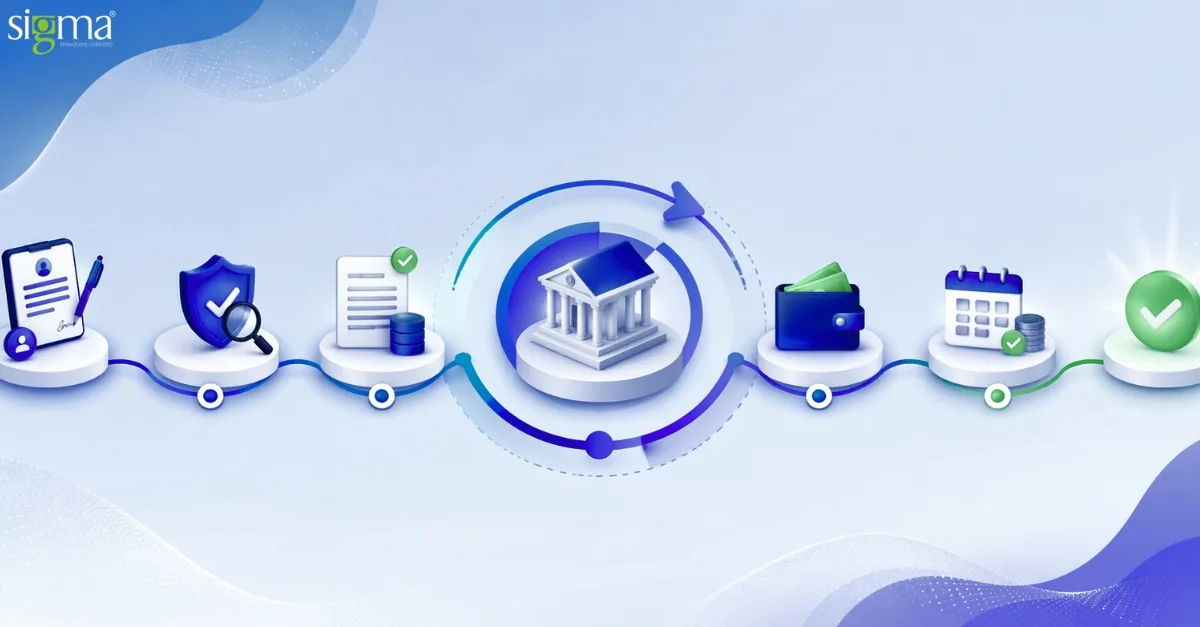
- Loan lifecycle automation replaces person-dependent handoffs between origination, underwriting, and servicing with event-driven data flow that moves a loan forward without a human re-entering information at every stage.
- A properly automated lending workflow lets a lender grow loan volume without growing operations headcount at the same rate, which changes the unit economics of every additional loan funded.
- Sigma Infosolutions treats legacy modernization as a phased engineering program, not a rip-and-replace project, so lenders gain automation without pausing loan originations during the transition.
Introduction
Every engineering leader at a growing lender eventually faces the same question: does scaling loan volume mean scaling headcount, or does it mean scaling the system? Loan lifecycle automation is the discipline of building or upgrading lending infrastructure so that data moves between origination, underwriting, servicing, and collections without a person manually re-entering it at each handoff. The decision in front of most VPs of Engineering is not whether to automate; that answer is usually already clear. It is how: build custom automation in-house, buy and integrate a platform, or modernize the legacy system already running the business. Each path has a real cost and a real risk profile, and the wrong choice is expensive in a way that is hard to reverse once loan volume and borrower data are already flowing through it.
Scale Lending Without Scaling Complexity
Modernize loan lifecycle workflows with Sigma’s digital lending solutions.
Why Manual Handoffs Become an Operational Ceiling as Loan Volume Grows
A lending operation built for modest volume can run on manual handoffs between systems without anyone noticing the cost. A loan officer moves data from the origination form into the servicing platform. An underwriter reviews a file that sat in a queue overnight. A collections agent pulls payment history from a separate system before making a call. None of this feels broken at low volume. It becomes a hard ceiling once volume grows, because every one of those manual steps scales linearly with loan count, and a lender cannot fund twice the loans without roughly twice the staff performing the same manual work, unless the handoffs themselves are automated.
This is the core economic argument for loan lifecycle automation: it decouples loan volume growth from headcount growth. An automated system that captures borrower income data once and shares it automatically across underwriting and servicing does not need a second data-entry step when volume doubles. An event-driven workflow that triggers the next stage automatically when a document is verified or a signature is captured, does not need a human watching a queue. The lenders who scale most efficiently are not the ones with the most staff; they are the ones whose systems do the coordination work that staff used to do by hand.
There is also a hidden cost most engineering budgets never line-item: onboarding time. A new hire on a manual, handoff-heavy team needs weeks to learn which system holds which piece of borrower data and how to move it correctly between them, since that knowledge often lives in tribal process rather than the software itself. A team running on automated workflows onboards faster, because the system, not a colleague’s memory, enforces the correct sequence of steps. That difference compounds every time headcount grows, which it inevitably does on a manual stack precisely because the stack itself cannot scale on its own.
Replace the brittle integrations and manual handoffs that slow your loan lifecycle without rebuilding the entire stack at once.
The Build, Buy, or Modernize Decision Framework
| Path | Best Fit | Primary Risk | Typical Timeline |
| Build Custom | A lender with a genuinely unique product or workflow that no platform supports | Longer time to value, ongoing maintenance burden falls entirely on internal engineering | Six months to over a year |
| Buy and Integrate | A lender whose core workflow is standard and just needs modern tooling | Integration gaps with existing systems, vendor lock-in on core loan data | Two to four months for initial deployment |
| Modernize Legacy | A lender with a fundamentally sound system that has become disconnected or slow through years of accumulated changes | Requires careful sequencing to avoid disrupting active loans during the transition | Phased, typically three to six months per stage |
Most engineering leaders assume this is a binary choice between building and buying, when the more common and often more practical path is the third one: modernizing what already exists. A legacy loan origination system is frequently not the problem itself; it is the accumulated manual workarounds, disconnected integrations, and undocumented customizations built up around it over years that create the real drag. Re-engineering the existing system, adding automated decisioning where a manual queue used to sit, connecting data feeds that used to require manual export and import, often delivers most of the value of a full replacement at a fraction of the cost and risk.
Each path also carries a hidden cost that rarely appears in the initial proposal. A custom build looks cheapest on the vendor comparison sheet and then becomes the most expensive path once ongoing maintenance, the next compliance change, and staff turnover on the team that built it are counted. Buying a platform looks fastest until the integration work with existing loan data reveals gaps the vendor demo never showed. Modernizing what already exists looks slowest to a leader who wants a clean break from legacy code, but it is usually the path that puts the least amount of borrower data and active loan volume at risk during the transition, which is the risk that matters most to the business even when it is not the easiest one to put on a slide.
Read our success story: A legacy loan origination system re-engineered to achieve same-day funding from a process that previously took weeks.
Sequencing Modernization Without Disrupting Active Loans
The hardest part of any loan lifecycle automation project is not the automation itself; it is doing the work while the business keeps running. A lender cannot pause loan originations for a quarter while engineering rebuilds the underwriting queue, which means modernization has to be sequenced in a way that keeps every active loan moving correctly throughout the transition. The most reliable approach starts with the highest-friction manual step, usually underwriting or a data re-entry point between two systems, and automates that single step first, proving the model on a contained piece of the workflow before expanding further.
From there, automation expands outward in the order that reduces the most manual effort per engineering hour spent: document processing and verification typically come next, since OCR and automated data extraction produce immediate, measurable time savings with relatively contained engineering scope. Workflow orchestration across the full origination-to-servicing handoff follows once the individual stages are each reliably automated on their own. Attempting to automate the entire pipeline in one release, rather than proving each stage independently, is the most common reason a modernization project runs over schedule and over budget, since a failure anywhere in an all-at-once rollout is harder to isolate and fix than a failure in one already-proven stage.
AI can automate more than individual lending tasks. When document processing, underwriting, workflow routing, and servicing still depend on manual coordination, AI lending automation can connect those stages and reduce operational friction.
Sigma Infosolutions Runs Modernization as a Phased Engineering Program
Most vendors pitch modernization as a project with a start date and an end date. Sigma treats it as an engineering program with defined phases, because a lending operation that automates the wrong stage first, or attempts too much change at once, ends up worse off than one that never started. Sigma completed the legacy origination modernization referenced above by adding automated decisioning engines and role-based access controls around the existing core system rather than replacing it outright, which is the same phased philosophy Sigma applied building a Snowflake-native lending intelligence platform: implementing row-level security and dynamic data masking alongside self-service analytics, so a growing lending organization gained governed automation without losing control over sensitive portfolio data. The market pressure behind this shift is real and growing; digital lending platform adoption continues to expand as borrower expectations for speed rise industry-wide, which is exactly why the build, buy, or modernize decision is no longer one an engineering leader can defer indefinitely.
Both engagements automated a different stage of the same lifecycle. The legacy LOS re-engineering compressed origination and underwriting from weeks to a single day; the Snowflake-native platform gave portfolio and risk teams self-service analytics without weakening data control. Automating one stage without the reporting layer that tracks it, or the reverse, leaves half the lifecycle still running on manual work.
That data-governance discipline is part of why lenders are moving on this now rather than treating it as a future roadmap item.
Conclusion:
Loan lifecycle automation is fundamentally a scaling decision, not a technology preference, since it determines whether a lender’s headcount has to grow at the same rate as its loan volume. Manual handoffs between origination, underwriting, and servicing feel manageable at low volume and become a hard operational ceiling as that volume grows. The build, buy, or modernize decision framework matters because each path carries a genuinely different cost and risk profile, and the choice is expensive to reverse once borrower data is already flowing through it. Modernizing an existing system is more often the right answer than engineering leaders initially assume, since most legacy platforms are fundamentally sound underneath years of accumulated manual workarounds. Sequencing that modernization around the single highest-friction manual step first, then expanding outward, keeps active loans moving safely throughout the transition. Attempting to automate an entire pipeline in one release is the most common reason these projects run over schedule and over budget. Lenders that treat modernization as a phased engineering program, rather than a single rip-and-replace event, consistently see lower disruption and faster time to measurable value. That phased discipline is what separates a lending operation that scales its systems from one that keeps scaling its staff instead. Sigma Infosolutions runs legacy modernization this way, proving automation on one stage before expanding to the next rather than attempting a single large cutover. For a VP of Engineering or CTO facing this decision, the framework matters more than the vendor, since choosing the wrong path is far costlier to correct than taking the time to choose correctly at the outset. That framework, not a generic platform pitch, is what should guide the next step in evaluating a modernization partner.
Modernize the Systems Behind Your Lending Growth
Build, modernize, and integrate financial software to automate lending workflows without disrupting the systems your business depends on.
Frequently Asked Questions
Should a lender build custom loan automation or buy an existing platform?
It depends on whether the lender’s workflow is genuinely unique or largely standard. Custom builds make sense for a distinctive product a platform cannot support; buying and integrating fits a standard workflow that just needs modern tooling. Most lenders, though, get more value from modernizing what they already have.
What is loan lifecycle automation, specifically?
It is the practice of connecting origination, underwriting, servicing, and collections so data moves between stages automatically instead of through manual re-entry. The goal is event-driven workflow, where completing one step triggers the next without a person moving files or re-keying information between separate systems.
Can a legacy loan origination system be modernized without replacing it entirely?
Frequently, yes. Many legacy systems are fundamentally sound underneath but have accumulated manual workarounds and disconnected integrations over several years of incremental changes. Re-engineering the existing system, adding automated decisioning and connecting data feeds properly, often delivers most of a full replacement’s value at meaningfully lower cost, risk, and disruption to active loans already in progress.
How do you sequence a loan lifecycle automation project without disrupting active loans?
Start with the single highest-friction manual step, prove automation works there, then expand outward in order of effort saved per engineering hour. Attempting to automate the full pipeline in one release is the most common reason these projects run over schedule, since isolating a failure across an all-at-once rollout is far harder.
What is the biggest risk in a loan lifecycle automation project?
Automating the wrong stage first, or attempting too much change in a single release, which makes failures harder to isolate and can disrupt loans already in progress. A phased approach that proves each automated stage independently before expanding carries materially lower operational risk than a single large cutover.