Magento Headless Commerce: Is It the Right Move for Your Enterprise Store?
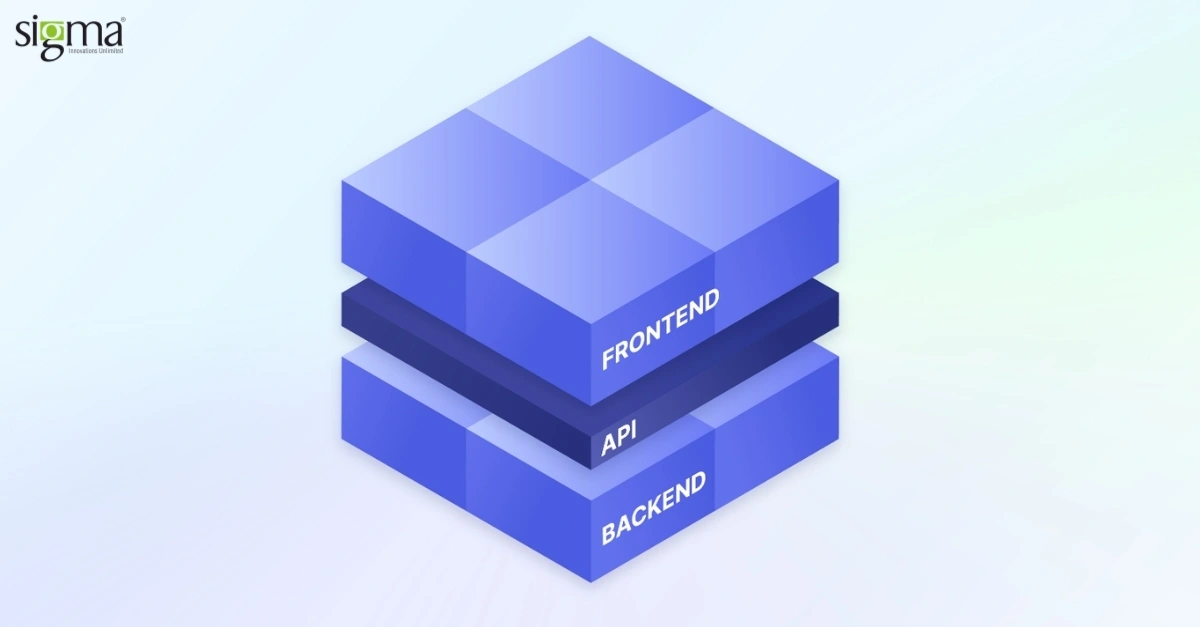
Headless commerce is an architecture in which the storefront runs as a separate application and communicates with the commerce engine through APIs. For Adobe Commerce merchants above roughly 20 million USD in annual online revenue, the question is no longer whether the pattern works, but whether a rebuild pays for itself inside a planning horizon a board will approve.
Most evaluations stall because the decision gets framed as a technology comparison rather than a capital allocation with a defined payback period. The wrong call produces a multi-quarter program that ships a storefront no faster than the one it replaced. This article sets out the conditions under which decoupling is justified, the conditions under which it is not, and the qualification test that separates the two.
Key Highlights:
- Enterprise Magento teams cannot reliably determine whether catalog complexity, roadmap ambition, and frontend team maturity justify decoupling the storefront.
- A clear qualification test converts an open-ended replatforming debate into a scoped decision with a defined payback horizon.
- Luma-based storefronts continue to lose ground on Core Web Vitals while competitors ship experience changes on shorter release cycles.
- The frontend layer is separating from the commerce engine across enterprise retail, but the pace of that separation now varies by merchant maturity rather than by platform.
What Headless Commerce Means on Adobe Commerce, and What It Does Not
Headless commerce on Adobe Commerce means the storefront runs as an independent application that queries the commerce engine over GraphQL rather than rendering through Magento’s PHP template layer. The backend retains catalog, pricing, promotions, inventory, and order management. The frontend becomes a separate codebase, typically React or Next.js, deployed on its own release cycle.
Two implementation routes dominate. Magento PWA Studio is Adobe’s official toolset, built on React and shipped with the Venia reference storefront, with documentation maintained by Adobe. The alternative is a custom frontend built on a framework the engineering team already runs, which trades roadmap alignment with Adobe for full control over rendering strategy.
What headless commerce is not is a performance guarantee. Decoupling removes Luma’s template bloat, but it introduces a rendering decision that the monolith previously made automatically. A React storefront rendered entirely in the browser will usually score worse on Largest Contentful Paint than a well-tuned server-rendered theme. The performance gain is available, not automatic, and it depends on server-side rendering, edge caching, and disciplined third-party script governance.
Composable commerce extends the same principle past the frontend, replacing individual backend capabilities such as search, content management, or checkout with specialist services. Decoupling the storefront is the first step toward that model, not a commitment to it. Merchants evaluating standalone headless ecommerce platforms alongside a Magento rebuild are comparing two different scopes of change, and conflating them is the most common source of confusion in these evaluations.
Building a headless storefront requires more than choosing a framework.
Which Adobe Commerce Merchants Actually Clear the Bar
Decoupling is justified when the constraint blocking the roadmap sits in the frontend, and only then. Four conditions, taken together, indicate readiness.
Frontend velocity is the bottleneck. If experience changes wait on backend release trains, and the team can name specific initiatives delayed by that coupling, the architecture is the constraint. If the delay comes from the merchandising process or content approvals, decoupling will not help.
A permanent frontend team exists. A headless commerce architecture requires engineers who own React, build tooling, rendering strategy, and Core Web Vitals continuously. An agency can build it. Someone internal has to run it.
Multiple experiences share one commerce engine. A single web storefront rarely justifies the overhead. Two brands, a mobile application, in-store clienteling, or a marketplace surface all drawing on the same catalog changes the arithmetic.
The catalog and integration surface are genuinely complex. Large attribute sets, configurable products with deep option trees, and ERP or PIM synchronization all reward an API-first boundary, because integration logic stops competing with template logic.
Merchants who fail two or more of these conditions usually get more from a Hyvä theme upgrade than from a rebuild. Hyvä replaces Luma’s RequireJS and Knockout.js stack with Tailwind CSS and Alpine.js while keeping the Magento template layer intact, which means the existing team stays productive from day one.
Read more: Compare the two realistic exits from Luma before committing a roadmap quarter.
Monolith, Hyvä, and Headless Compared Across Cost, Skills, and SEO Risk
The three paths differ less in ceiling performance than in what they demand from the organization. The table below sets them against the criteria that actually determine payback.
| Criterion | Luma monolith | Hyvä theme | Headless (PWA Studio or custom) |
| Relative build cost | Lowest, no rebuild required | Moderate: one frontend rebuild plus a per-instance license | Highest: full frontend rebuild plus new infrastructure |
| Time to launch | Not applicable | The shorter of the two rebuild paths | Longest and sensitive to integration count |
| Team skills required | PHP and Magento templating | PHP, Magento templating, Tailwind CSS, Alpine.js | React or Next.js, rendering strategy, build and deploy tooling |
| Core Web Vitals ceiling | Constrained by template bloat | High, without a separate frontend team | Highest, but only with server-side rendering |
| SEO risk during migration | None | Low, URL, and markup structure largely preserved | Elevated, requires rendering and redirect governance |
| Ongoing operating overhead | Single-release train | Single-release train | Two release trains, separate monitoring and deployment |
Google evaluates Core Web Vitals at the 75th percentile of real user sessions, against thresholds of 2.5 seconds for Largest Contentful Paint, 200 milliseconds for Interaction to Next Paint, and 0.1 for Cumulative Layout Shift. That percentile matters for this decision. A storefront that performs well in a lab test can still fail in the field, and a decoupled frontend without server-side rendering frequently does.
The Costs That Appear After Launch, Not During the Build
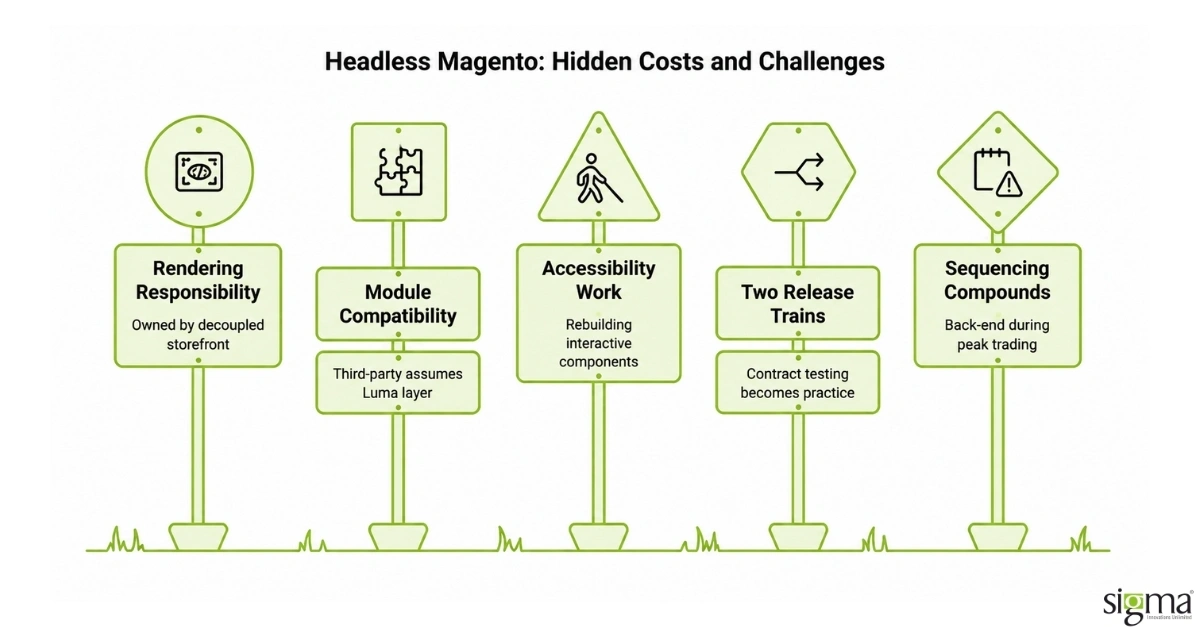
The build is the visible cost of a headless Magento program. The operating model determines whether the investment holds.
Rendering becomes an owned responsibility. Search crawlers, social preview services, and accessibility tooling all consume rendered HTML. A decoupled storefront has to produce that HTML through server-side rendering or a prerendering layer, and the configuration must be maintained as routes and templates change.
Module compatibility narrows. A large share of the Magento extension ecosystem ships frontend templates that assume the Luma layer. Under a decoupled storefront those templates are inert, and the functionality has to be rebuilt against the API. Merchants running twenty or more customer-facing extensions should audit this before scoping anything else.
Accessibility work does not transfer. US and Canadian merchants operating against ADA expectations and WCAG conformance targets are rebuilding every interactive component, which makes the entire accessibility surface new. Remediation already completed on the Luma storefront does not carry across.
Two release trains require two disciplines. The frontend and backend can deploy independently, which is the point, but contract testing between the API layer and the storefront becomes a standing engineering practice rather than an occasional concern.
Sequencing compounds all of it. A frontend rebuild that lands inside the peak trading window is a risk event, not a launch. Teams across the US, Canada, and ANZ generally need the architecture decision settled in the first half of the year, with Adobe Summit roadmap announcements factored in, so the build completes six to nine months ahead of Black Friday and Cyber Monday.
Sequencing a Storefront Rebuild So It Lands Before Peak Trading
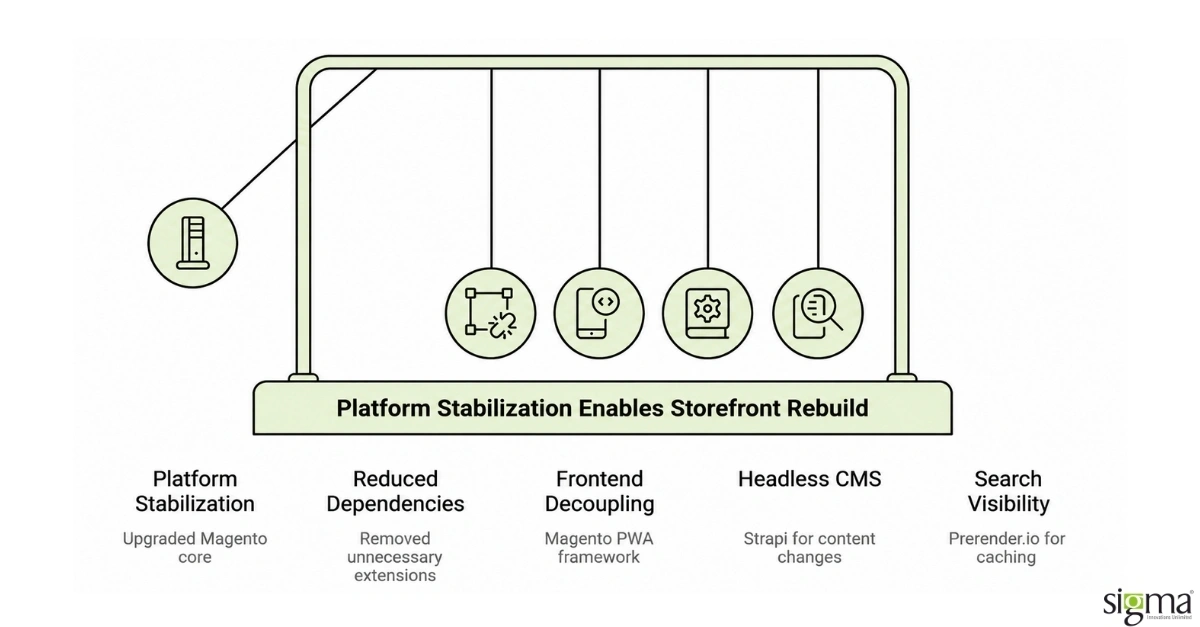
Order of operations decides whether these programs succeed. Sigma Infosolutions sequences frontend work behind platform stabilization, because a decoupled storefront built on an unstable backend inherits every defect it was meant to escape.
An Oceania-based retailer operating more than 120 physical stores illustrates the pattern. The merchant ran two separate Magento instances with two admin panels, an outdated 2.3.2 core, an accumulation of unnecessary extensions, and a frontend failing on current mobile devices.
The brief was to decouple. Sigma did not start there. The platform was upgraded to 2.4.4 first, and the extension footprint was reduced by leaning on native Magento functionality, which removed dependencies that would otherwise have been carried into the new architecture. Only then was the frontend decoupled, using a Magento PWA framework with the Venia theme extended for the merchant’s requirements, and Strapi introduced as a headless CMS so content changes no longer required a code deployment. Prerender.io was deployed as a Cloudflare worker serving cached HTML to crawlers, which is the specific control that stops a decoupled storefront from losing search visibility.
A Middle East electronics retailer followed the same order under different constraints. The engagement opened with a full audit covering QA, usability, code review, and framework assessment across Magento 2, React, Next.js, and Node.js. A 2.3.2 to 2.4.5 upgrade followed, then two-way SAP synchronization, then infrastructure work on AWS Kubernetes with automatic resource scaling. Website performance improved by 60 percent, and the scaling configuration removed downtime during traffic peaks.
The common thread is that decoupling was the last decision, not the first. On several engagements, the recommendation has been not to decouple at all: a Hyvä implementation for a fashion retailer moved a PageSpeed Insights score from 35 to above 98, cut load time by 60 percent, raised conversion by 20 percent, and reduced bounce rate by 25 percent, with no separation of frontend and backend involved.
Conclusion
Headless commerce is a defensible architecture for enterprise Adobe Commerce merchants, but it is a capital decision rather than a technical preference. The merchants who benefit have a frontend bottleneck they can name, a permanent frontend team, multiple experiences drawing on one commerce engine, and a catalog complex enough to reward an API boundary. Merchants who do not meet those conditions generally recover more value from a Hyvä upgrade than from a rebuild.
The costs that decide the outcome appear after launch, in rendering ownership, module compatibility, accessibility rework, and the discipline of running two release trains. Sequencing the work so platform stability precedes decoupling, and so launch clears the peak trading window, is what separates a successful headless commerce program from an expensive one.
Frequently Asked Questions
Is headless Magento worth the investment for an enterprise store?
It depends on whether the frontend is the actual constraint. Merchants with a permanent frontend engineering team, several customer experiences drawing on one commerce engine, and a genuinely complex catalog usually recover the investment. Merchants running a single storefront without a dedicated frontend team typically see faster payback from a Hyva theme upgrade instead.
Does headless commerce actually improve site speed and search visibility?
Decoupling removes template bloat, but speed depends entirely on the rendering strategy chosen. A browser-rendered React storefront often performs worse on Largest Contentful Paint than a well-tuned server-rendered theme. Gains require server-side rendering, edge caching, and strict third-party script control. Search visibility depends on serving crawlers fully rendered HTML through prerendering or server-side rendering.
How long does a headless Magento build take?
Timelines are driven by integration count rather than catalog size. Every ERP, PIM, search, payment, and personalization connection has to be rebuilt against the API layer, and every extension that shipped Luma templates needs a replacement. Enterprise programs generally need the architecture decision settled six to nine months before peak trading season begins.
What drives the cost of a headless Magento implementation?
Cost concentrates in four areas: the frontend rebuild itself, replacement of extensions that shipped Luma-dependent templates, new hosting and rendering infrastructure, and accessibility rework across every interactive component. Ongoing cost comes from running two release trains with separate monitoring and deployment. An extension audit before scoping prevents the largest budget surprises.
When is headless the wrong answer for an Adobe Commerce merchant?
Decoupling is the wrong answer when delays originate in the merchandising process, content approval, or backend performance rather than frontend architecture. It is also wrong without a permanent internal frontend team, because an agency can build a decoupled storefront, but someone internal must own rendering, build tooling, and Core Web Vitals continuously.